
Useful information
What is good to know,in plain words.
The steps to take after a death and the Christian funeral customs in Romania, in brief. If anything is unclear, call us at any time.
First steps
The first thing is a phone call. What follows depends on where the death occurred.
At home
Call us. A doctor must confirm the death and issue the medical certificate of death. We come and take care of the rest.
In hospital
The hospital issues the medical certificate of death. Call us and we collect what is needed from the hospital and handle the paperwork.
Abroad
Call us as soon as you can. We tell you which documents the country requires and organise the repatriation.
The documents you need
For the death certificate and the burial permit, issued by the civil registry office, you usually need:
- the medical certificate of death
- the identity card of the deceased
- the birth certificate and, where applicable, the marriage certificate of the deceased
- the identity card of the person registering the death
We tell you exactly what else is needed in your case and run the errands for you. We also help with the application for the state funeral allowance.
The funeral
The first step is to inform the parish priest. Together with him you set the date and time of the funeral and of the evening services before it.
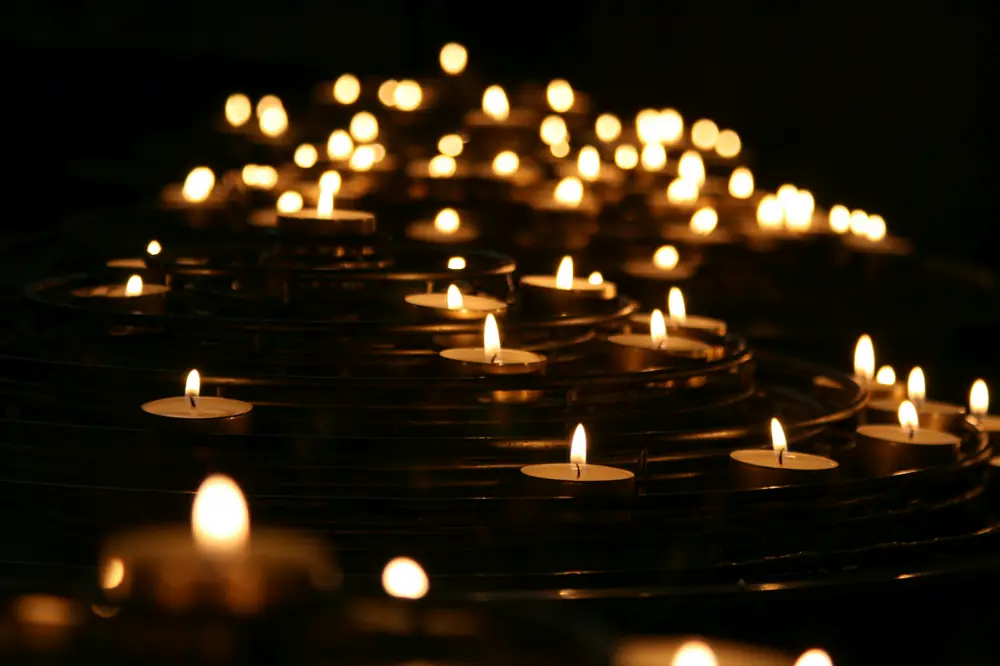
Your loved one is washed, dressed in new, clean clothes and laid in the coffin facing east. An icon is placed on the chest and a small cross in the hands. Candles are lit at the head, and the large beeswax candle burns during the services.
Good to remember
- Money or objects are not placed on the body or in the pockets. The money can be given as alms instead.
- Close relatives wear a black mourning ribbon, usually for 40 days, and a black cloth is hung at the door of the house.
- Until the funeral, the customary greeting is „Dumnezeu să-l (s-o) ierte!”, “May God forgive him (her)”.
- The funeral does not have to take place on the third day. It can be held earlier, especially in summer.
The wake and evening prayers
On the evenings before the funeral, the priest comes for a short prayer service for the departed. The family prepares a censer with charcoal and incense, a dish of koliva and a glass of wine.
Koliva, made of boiled and sweetened wheat, is a sign of faith in the resurrection.
Good to remember
- Use a proper censer and special charcoal for the incense, not paper or spirit.
- Silence is kept during the service.
- On fasting days, the food and the koliva are prepared without animal products.
The service and the procession
On the agreed day, after the service at home or in the chapel, the procession forms: the cross at the front, then the koliva and wine, the tree with gifts, the wreaths, the priest, the hearse and the family.
The funeral service is held at the church. At the end, those present say their farewells, quietly.
Good to remember
- Lit candles are handed out to those present. The reply is „Dumnezeu să-l ierte!” or „Bogdaproste”, rather than “thank you”.
- Candles are given to close relatives too, not only to the other guests.
- It is best to take the shortest route to the cemetery, especially for older people.
- A funeral can be held on any day of the week, including Monday.
At the cemetery
At the grave, the priest says the last prayer and “Eternal Memory” is sung. Those who have not yet said goodbye can do so now. The priest then blesses the koliva and the gifts, which are shared for the soul of the departed.
- The icon from the chest is taken home. It is usually used at the 40-day memorial.
- The flowers from the coffin can be laid on the grave once it has been covered.
- The tree with gifts is placed next to the cross after the gifts have been shared.
- Moderation matters more than display: prayer and charity are what help most.
Memorials afterwards
After the funeral, the family invites those who stood by them to a meal. It is eaten quietly, and instead of “cheers” people say „Dumnezeu să-l ierte!”.
Memorial services are held at these intervals, counted from the day of death:
- 3 days
- On the day of the funeral.
- 9 days
- A small memorial, usually on a Saturday, with koliva, wine and a list of names.
- 40 days
- A large memorial. Clothes and dishes are given as alms.
- 3, 6 and 9 months
- Small memorials.
- 1 year
- A large memorial. The cross on the grave is usually blessed as well.
- Up to 7 years
- One memorial every year, on the anniversary of the death.
When memorials are not held
- on Sundays
- between Christmas and Epiphany
- from Meatfare Sunday to the first Saturday of Great Lent
- from Lazarus Saturday, the day before Palm Sunday, to Thomas Sunday
- on major feast days
If a memorial date falls on one of these days, the memorial is held earlier, not later.
Other customs and advice
- The permanent cross is usually raised at 40 days or after one year and is blessed by the priest at the grave.
- For 40 days, a candle burns at the grave and incense is offered.
- The grave is tended all year round, not only on memorial days.
- The general days of remembrance are the winter and summer Soul Saturdays and the Saturdays of Great Lent.
- For children, priests or monks, the funeral service follows a different order.
Customs can differ from one parish to another. For questions of tradition, speak with the priest. For the practical side, call us at any time on +40 722 775 913.
24/7 · Bacău
We are here. Always.
Call us at any hour. We will listen and calmly tell you what happens next.
+40 722 775 913